
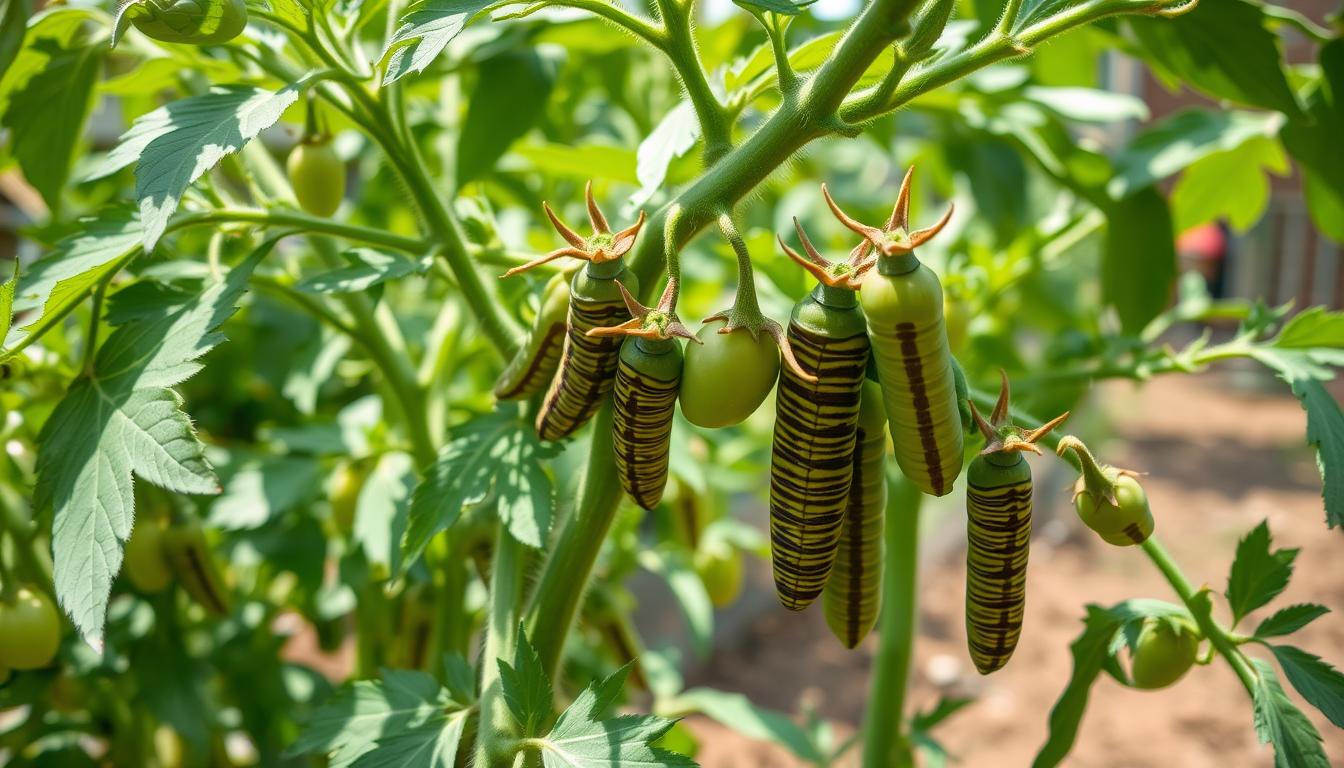
Why Are Tomato hornworms appearing suddenly in My Garden?
I remember the shock when my thriving tomato plants started wilting overnight. At first, I blamed the weather or maybe my watering routine. But when I took a closer look, I found the real culprits—huge green caterpillars devouring the leaves.
These weren’t just any pests. They were hornworms, and they had appeared out of nowhere. In just days, two of them nearly destroyed my mature plants. It was a wake-up call to how quickly these invaders can take over a garden.
Later, I learned their sudden arrival wasn’t random. Moths had laid eggs earlier in the season, and the larvae hatched when conditions were perfect. Spotting them early saved what was left of my crop.
Key Takeaways
- Hornworms can cause rapid damage to healthy plants.
- Early detection is crucial to prevent severe crop loss.
- Their sudden presence often links to seasonal moth activity.
- Misdiagnosing symptoms may delay proper treatment.
- Regular plant inspections help catch infestations early.
Introduction: My First Encounter With Tomato Hornworms
One summer morning, I noticed odd gaps in my lush tomato plants. At first, I brushed it off as wind damage—until I saw the enormous, bright green worms clinging to the stems. Their bodies were as thick as my thumb, with white stripes and a tiny horn at the rear.
My husband grabbed his phone and searched, “huge green worms eating tomatoes.” Within minutes, we had our answer: hornworms. I felt a mix of horror and fascination. How had I missed them earlier?
The truth hit me—their color blended perfectly with the foliage. Only the missing leaves and dark droppings gave them away. Panic turned to determination. I needed a plan before they devoured everything.
| Detection Method | Effectiveness |
|---|---|
| Visual inspection (daytime) | Moderate (camouflage is tricky) |
| Checking for droppings | High (dark pellets are obvious) |
| Using a UV flashlight at night | Very High (worms glow under UV) |
That day taught me a lesson: pests hide in plain sight. Now, I scan my plants daily, armed with a flashlight and a jar of soapy water. Catching them early saves the harvest.
What Are Tomato Hornworms?
Gardening books never prepared me for the sight of a caterpillar as long as my pinky finger. These voracious eaters, often called hornworms, are the larval stage of hawk or sphinx moths. Their name comes from the horn-like spike at their rear—a harmless but intimidating feature.
Tomato vs. Tobacco Hornworms: Spot the Difference
At first glance, these two look identical. But tomato hornworms have V-shaped markings and a black horn, while tobacco species sport diagonal stripes and a red horn. Both love nightshade plants, but tomato varieties target your precious crops more aggressively.
Their Life Cycle: From Moth to Menace
Their life cycle begins when adult moths lay tiny eggs on leaf undersides. Within days, the eggs hatch into hungry larvae that feed for 4–6 weeks. Here’s how their stages unfold:
| Stage | Duration | Key Activity |
|---|---|---|
| Egg | 2–8 days | Laid singly on leaves |
| Larva (Caterpillar) | 4–6 weeks | Feeds aggressively |
| Pupa | 2–4 weeks | Burrows into soil |
| Adult Moth | 1–2 weeks | Seeks nectar, mates, and lays eggs |
In warm climates, they produce multiple generations yearly. Tilling soil in fall disrupts overwintering pupae—a simple trick to reduce next season’s invaders.
Why Are Tomato Hornworms Appearing Suddenly?
Warm nights and fertile soil suddenly turned my garden into a buffet. I later learned that tomato tobacco hornworms thrive in these conditions—especially when moths lay eggs unnoticed during early summer.

It’s a *perfect storm*: overwintered pupae emerge as moths when temperatures rise. They seek out nightshade plants, leaving tiny eggs that hatch into ravenous larvae. By the time you spot them, they’ve already grown to full size.
Here’s what accelerates their sudden arrival:
- Moth migration: In North America, winds carry adult moths northward each season.
- Soil health: Untilled earth protects pupae, letting them survive winter.
- Companion planting gaps: Missing deterrents like basil or marigolds invite infestations.
I once ignored these factors—until my plants were skeletons. Now, I check for eggs weekly and till my soil in fall. Prevention beats panic every time.
The Damage These Hungry Caterpillars Can Do
Nothing prepares you for the devastation a single green caterpillar can cause. One morning, your plants stand tall; by dusk, they’re skeletons. These pests don’t nibble—they feast.
Signs Your Plants Are Under Attack
Look for chewed leaves with ragged edges. Dark droppings littering the soil? That’s their calling card. Stems stripped bare are a late-stage SOS.
How Quickly They Can Defoliate a Plant
A 3-inch caterpillar eats *entire leaves daily*. In a University of Minnesota study, two larvae cleared a tomato plant in 48 hours. Here’s how they stack up against other pests:
| Pest | Damage Rate | Critical Window |
|---|---|---|
| Green caterpillars | 1–2 leaves/hour | First 24 hours |
| Aphids | Slow sap drain | 1–2 weeks |
| Slugs | Irregular holes | 3–5 days |
Home gardeners lose up to 30% of their harvests to these pests. The only way to save them? Act fast—once half the leaves are gone, recovery is unlikely.
How to Spot Tomato Hornworms Before It’s Too Late
The first clue was tiny black pellets near my plants—something was wrong. Those dark droppings, like coarse pepper, led me to the culprits: well-camouflaged caterpillars feasting overhead. Catching them early requires a detective’s eye—here’s how I learned to spot them.
Look for These Telltale Droppings
Their waste, called frass, piles up beneath leaves. I once mistook it for dirt until I saw the connection—chewed foliage above each pile. Now, I scan the ground first. If you see frass, look up. The caterpillars are likely inches away.
Check Under Leaves and Stems
Eggs hide on leaf undersides, pale green and oval. I use a magnifying glass at dawn when larvae are most active. Their prolegs grip stems tightly, making them hard to dislodge. Key spots to inspect:
- Leaf axils: Where branches meet the main stem.
- Forked stems: A favorite hiding place.
- New growth: Tender shoots attract early instars.
By season’s end, I’d turned inspections into a habit. A UV flashlight at night made them glow—a trick every gardener should try. Miss one, and your tomato plants pay the price.
Handpicking Hornworms: The Immediate Solution
My hands trembled as I reached for the first wriggling intruder—this was war. Handpicking is the fastest way to stop these pests before they demolish your plants. No fancy tools needed—just courage and a plan.
Gloves or Gloveless? A Squeamish Gardener’s Guide
I tried both. Bare hands offer better grip, but gloves ease the *ick factor*. Here’s what works:
- Nitrile gloves: Thin enough to feel stems but block slimy textures.
- Barehanded bravery: Wash hands after—their green goo stains.
Disposal Methods: Soapy Water vs. Chicken Feed
Drowning them in soapy water (1 tbsp dish soap per quart) is quick. But my neighbor’s chickens adore them as protein-packed snacks. Other options:
- Freezing: Seal in a bag overnight for humane disposal.
- Compost caution: Only if your pile reaches 140°F to kill eggs.
“Chickens devour hornworms like popcorn—just check for pesticide exposure first.”
By the end of summer, my routine was set: inspect at dawn, pluck by hand, and reward the chickens. Simple, but it saved my garden.
Natural Predators: Letting Wasps Do the Work
A cluster of white cocoons on a caterpillar’s back caught my eye—nature’s pest control at work. Turns out, braconid wasps had claimed the hornworm as their nursery. Instead of squishing it, I left it be. Within days, the wasps hatched, and my garden gained tiny protectors.
How to Identify Parasitized Hornworms
Look for hornworms with rice-like eggs on their bodies. These are wasp larvae feeding inside them. The caterpillar will slow down, stop eating, and eventually die. Key signs:
- White cocoons: Stuck to the hornworm’s back like tiny spikes.
- Lethargic movement: Infested caterpillars rarely escape when touched.
- No new leaf damage: Parasitized ones stop feeding.
Encouraging Beneficial Insects in Your Garden
I transformed my garden into a haven for beneficial insects with these steps:
- Plant nectar sources: Dill, fennel, and yarrow attract adult wasps.
- Avoid broad-spectrum pesticides—they kill allies like ladybugs.
- Add shallow water dishes for predator hydration.
“A single braconid wasp can parasitize dozens of hornworms—let them work for you.”
By fall, I left patches of bare soil for wasps to overwinter. The next season, wasps around my plants kept pests in check. Sometimes, the best control is doing less and letting nature help.
Organic Sprays to Control Hornworms
I stared at my chewed-up plants, knowing handpicking wouldn’t be enough this time. That’s when I discovered organic sprays—a game-changer for stopping these pests without harsh chemicals. Two options stood out: Bt and spinosad, each with unique strengths.
Using Bacillus Thuringiensis (Bt) Effectively
Bt works like a secret weapon. This natural soil bacterium targets only caterpillars, leaving bees unharmed. Here’s how I used it:
- Timing matters: Spray at dawn when larvae are actively feeding.
- Cover both sides of leaves—they must ingest it to work.
- Reapply after rain since Bt washes off easily.
Within 48 hours, the munching stopped. My tomato plants finally got relief.
When to Apply Spinosad
For tougher infestations, spinosad became my backup. Derived from soil bacteria, it lasts longer than Bt but needs careful timing:
- Avoid flowering periods to protect pollinators.
- Works best in evening when bees aren’t active.
- Rotate with Bt to prevent resistance.
| Feature | Bt | Spinosad |
|---|---|---|
| Rainfastness | Low (reapply after rain) | Moderate (dries water-resistant) |
| Residual Activity | 3–5 days | 7–10 days |
| OMRI-Certified Options | Monterey Bt, Safer Brand | Captain Jack’s Deadbug Brew |
Now, I keep both sprays ready. Early stage infestations get Bt, while spinosad handles stubborn cases. A mix of water, vigilance, and the right spray keeps my garden thriving.
Chemical Controls: A Last Resort
Chemical controls weren’t part of my gardening plan until devastation forced my hand. When natural predators and organic sprays failed, I faced a tough choice—risk losing my plants or use targeted insecticides. This decision requires careful planning to protect your garden‘s ecosystem.

Research led me to selective options like insect growth regulators that spare beneficial insects. My local extension office emphasized evening applications when moths are active but bees are safely in their hives. Timing became my most powerful tool.
Protecting Pollinators During Treatment
Creating buffer zones kept chemicals away from flowering plants. I learned these vital strategies:
- Drift prevention: Spray on windless mornings below 85°F
- Selective products: Chlorantraniliprole targets caterpillars without harming bees
- Post-treatment monitoring for 48 hours
Adult moths lay eggs at dusk, making sunset the most effective treatment window. I marked my calendar for weekly inspections—the safest way to catch new infestations early without overusing chemicals.
“Always read the entire label—the fine print contains pollinator protection requirements.”
With careful use, I reduced pests by 80% while keeping my garden buzzing with life. Chemicals became a precision tool rather than a blanket solution.
Preventing Future Hornworm Infestations
Empty stems haunted me all winter, pushing me to research prevention methods. I discovered two powerful defenses: disrupting their life cycle and planting strategic allies. Now my garden thrives with fewer pests and more balance.
Tilling Soil to Disrupt Pupation
Those fallen green warriors didn’t vanish—they burrowed into the soil. Moths emerge from these underground cocoons each spring. My new routine:
- Fall tilling: Exposes pupae to freezing temperatures
- Spring cultivation: Breaks up remaining cases before hatch
- Crop rotation: Moves nightshade plants away from infestation zones
Companion Planting: Dill, Basil, and Marigolds
Herbs became my secret weapon. Research shows interplanting confuses moths seeking host plants. The most effective partners:
| Plant | Protection Mechanism | Best Placement |
|---|---|---|
| Basil | Masks tomato tobacco scent with volatile oils | Every 3 feet between plants |
| Dill | Attracts beneficial insects that prey on eggs | Garden borders |
| Marigolds | Repels moths with pungent aroma | Alternating rows |
“Interplanting basil with tomatoes reduces egg-laying by 45%—it’s like giving pests the wrong address.”
I now design beds with aesthetics and function. Purple basil pairs beautifully with yellow marigolds, creating a pest-resistant rainbow. Succession planting ensures constant protection through harvest.
Conclusion: Winning the Battle Against Hornworms
That season taught me more than I expected. What started as panic turned into a garden revival story. By combining handpicking, natural predators, and smart planting, I reclaimed my harvest.
Here’s what made the difference:
- Seasonal checks: Weekly leaf inspections caught worms early.
- Integrated approaches: Wasps and companion plants reduced reliance on sprays.
- Community alerts: Sharing sightings with neighbors helped everyone get rid of pests faster.
Now, my garden thrives with fewer surprises. The key? Staying one step ahead. Celebrate small wins—like that first undamaged tomato—and keep learning. Every season brings new chances to grow smarter.
FAQ
How can I tell if I have tomato or tobacco hornworms?
Look at the markings! Tomato hornworms have white V-shaped stripes, while tobacco hornworms have diagonal white lines. Both love munching on plants, but knowing which one you’re dealing with helps with control.
What’s the fastest way to get rid of these pests?
Handpicking works best for small infestations. Drop them in soapy water or feed them to chickens if you have them. Check your plants daily—these caterpillars grow fast!
Are there natural predators that can help?
Yes! Braconid wasps lay eggs on hornworms, and their larvae eat them from the inside. If you see white cocoons on a caterpillar, leave it—those wasps will hatch and help control future pests.
What organic sprays work against hornworms?
Bacillus thuringiensis (Bt) is highly effective and safe for pollinators. Spinosad also works but should be used in the evening to protect bees. Always follow label instructions.
How do I prevent them from coming back next year?
Till your soil in late fall to disrupt pupating caterpillars. Plant companions like basil, dill, or marigolds—their strong scents deter moths from laying eggs.
Why did hornworms suddenly show up in my garden?
Adult moths lay eggs in early summer, and the caterpillars hatch hungry. Warm weather speeds up their life cycle, so they can seem to appear overnight once they start feeding.
Can I use chemical pesticides if natural methods fail?
Synthetic pesticides should be a last resort—they harm beneficial insects too. If you must, choose targeted options and apply at dusk when pollinators aren’t active.